There’s something almost magical about opening an old photo album and discovering the raw humanity of those who came before us. These aren’t staged Instagram moments or carefully curated memories—they’re unfiltered glimpses into genuine connection, unguarded laughter, and the kind of love that doesn’t need filters or hashtags to prove its worth.
What strikes us most when we examine vintage family photographs isn’t the fashion or the grainy quality of the film. It’s the unmistakable presence of real affection—a grandmother’s hand resting protectively on her grandchild’s shoulder, a father’s proud stance beside his son, siblings locked in an embrace that transcends decades. These moments whisper a universal truth that modern families are only beginning to rediscover: the deepest bonds between people are often the simplest ones.
Throughout history, families have preserved their most cherished moments through photography. From black-and-white portraits taken in formal studios to candid color photographs from the 1970s, each image tells a story of devotion, sacrifice, and unconditional love that has somehow managed to survive generations of change.
The Timeless Power of a Single Photograph
A photograph is more than just an image frozen in time. It’s a vessel that holds emotion, memory, and the essence of who we are as people. When we look at a vintage family photo, we’re not simply observing clothing styles or outdated hairstyles—we’re witnessing the actual presence of love made visible.
Professional photographers and historians have long noted that the best vintage family photos share a common element: authenticity. Unlike modern staged photography, many vintage family portraits capture people in their natural state, revealing genuine expressions that lasted just long enough for the film to record them.
The permanence of these photographs gave them special significance. Families understood that these images might be the only tangible proof of their existence and their relationships. This awareness often translated into a certain gravitas in how people presented themselves, but also a tenderness when they posed with loved ones.
Consider the physical act of taking a family photograph in the early-to-mid 20th century. It required planning, travel to a studio, expense, and patience. The deliberate nature of the process meant that families chose these moments with care, making each photo a statement about what they valued most.
Multi-Generational Love Stories Captured in Film
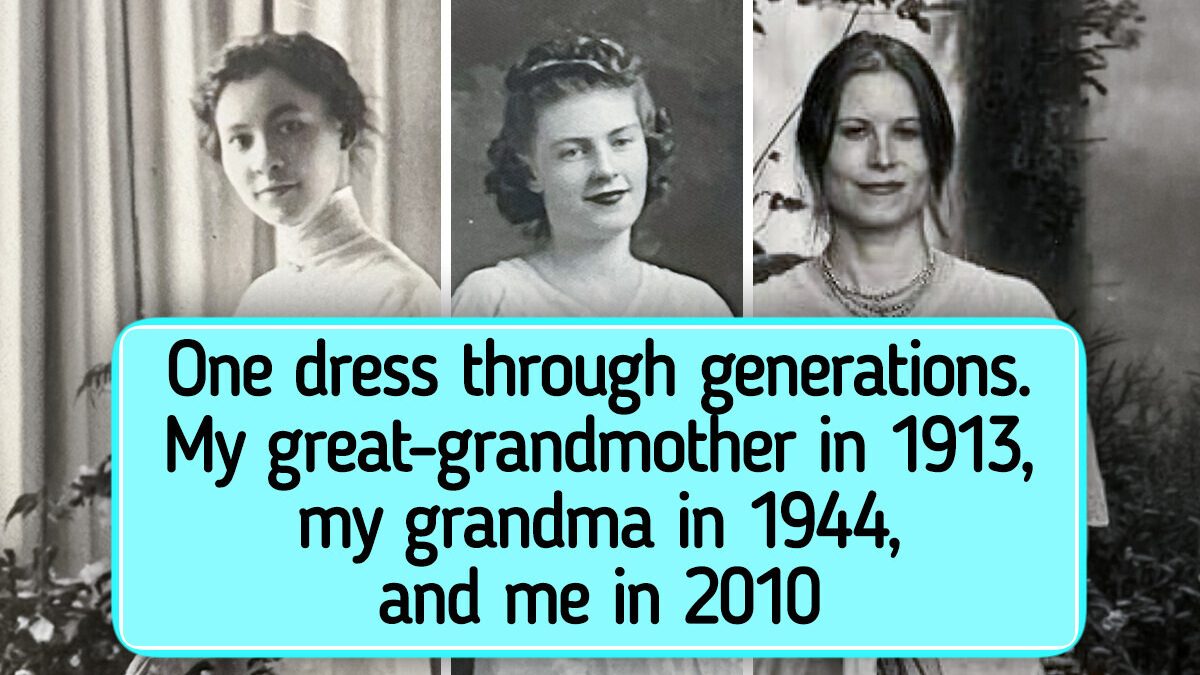
Some of the most powerful vintage family photographs are those that span generations. A grandmother holding her daughter while her daughter holds her own newborn creates a visual narrative of legacy and continuity that speaks to something profound in the human experience.
These multi-generational images remind us that love isn’t experienced in isolation—it’s a chain that connects us backward to our ancestors and forward to our descendants. When we see a great-grandmother’s hands guiding her great-grandchild’s hands, we witness the literal passing of tradition, knowledge, and affection.
Family researchers have documented that children who have strong connections to their family history—particularly through photographs and stories—tend to develop stronger emotional resilience and sense of identity. The visual presence of ancestors seems to matter more than we initially understood.
| Photo Type | Typical Era | Emotional Impact | Preservation Challenge |
|---|---|---|---|
| Studio Portraits | 1920s-1950s | Formal, dignified | Fading, brittleness |
| Candid Family Moments | 1960s-1980s | Warm, authentic | Color degradation |
| Holiday Gatherings | 1940s-1970s | Joyful, communal | Album adhesive damage |
| Milestone Celebrations | 1930s-1990s | Proud, celebratory | Environmental exposure |
When Everyday Moments Become Cherished Memories
Not all vintage family photographs are taken at significant milestones. Some of the most touching images capture the mundane—a father teaching his son to tie his shoes, a mother braiding her daughter’s hair, siblings playing in a backyard. These ordinary moments, preserved in photographs, transform into extraordinary treasures over time.
What makes these everyday photos so powerful is their unintentional honesty. There’s no performance, no careful staging beyond positioning for the camera. These are the moments that actually define what family means—the small gestures of care, the patient instruction, the comfortable togetherness that requires no special occasion.
Vintage family photographers often found their best work in these unguarded seconds. A candid expression worth more than a forced smile. A natural posture that revealed the true relationship between subjects. The casual way a parent’s arm rests around a child’s shoulder told the story of thousands of similar gestures, thousands of moments of protection and affection.
Modern researchers studying family dynamics have discovered that children who grew up seeing frequent physical affection documented in family photos experienced better emotional development and stronger family bonds. The visual representation of touch and closeness seems to reinforce its reality and importance.
The Silent Language of Physical Affection in Photographs
Body language in vintage family photographs communicates volumes. How close family members stand to one another, whether they touch, how they position themselves relative to the camera—these details reveal the actual texture of their relationships in ways that words cannot.
A father’s protective hand on his child’s shoulder. A mother’s forehead touching her baby’s forehead. Siblings standing with their arms linked. These physical connections documented in photographs serve as proof that affection was real, present, and continuous. They answer a question that every descendant eventually asks: “Did my ancestors really love each other?”
“The most revealing family photographs are those where we can see the actual distance—or lack thereof—between family members. Physical proximity in a photograph often mirrors emotional proximity. When we study vintage family photos, we’re essentially reading a map of love made visible through spatial relationships.” — Dr. Margaret Chen, Family Historian and Photography Analyst
This silent language transcends time and cultural boundaries. Whether examining a photograph from rural America, industrial Europe, or agricultural Asia, the fundamental expressions of familial love remain recognizable. A grandmother’s pride in her grandchild looks the same whether documented in 1935 or 1985.
Preserving Legacy Through Visual Storytelling
Each vintage family photograph that survives to the present day represents an act of preservation, whether intentional or accidental. Someone made the choice to keep this image, to protect it from the elements, to pass it along through generations. That choice itself becomes an act of love.
In an era before digital storage and cloud backup, preserving family photographs required deliberate effort. Albums had to be purchased, maintained, protected from moisture and light. Photographs had to be carefully placed, sometimes with handwritten captions and dates. This labor of preservation was an expression of how much these images mattered.
Many families today are discovering old photograph collections—shoeboxes full of undated images, albums with loose pages, envelopes of negatives stored in attics. The simple fact that these images survived at all speaks to the priority previous generations placed on maintaining their family stories.
Archivists and genealogists have found that the most well-preserved family photograph collections come from families that made a conscious effort to document relationships. Captions matter. Dates matter. Context matters. Without these details, photographs become divorced from their meaning—beautiful images with no story attached.
The Science Behind Recognizing Love in Old Photographs
Researchers studying facial expressions and body language have identified specific markers of genuine affection that appear consistently in photographs of families who report strong bonds. These markers transcend era, culture, and photographic technology.
- ➡10 Sibling Stories That Reveal the Strength of Love and the Cost of Loyalty
- ➡12 Stories Where Quiet Kindness Changed Someone’s World and Redefined Success and Happiness
- ➡17 Moments of Kindness and Solidarity That Prove the World Has Your Back
- ➡20+ Handmade Creations That Prove Patience and Love Can Turn Into Pure Art
Genuine smiles—those that involve the muscles around the eyes, not just the mouth—appear significantly more often in family photographs from generations with self-reported strong family connections. The same is true for relaxed posture, open body language, and physical proximity that appears comfortable rather than forced.
“When I analyze vintage family photographs for emotional authenticity, I’m looking for what we call ‘congruent expressions’—where the face, body, and spatial positioning all tell the same story. In families with genuine bonds, everything aligns. There’s no contradiction between what the mouth shows and what the eyes reveal.” — Dr. James Peterson, Clinical Psychologist and Non-Verbal Communication Specialist
The eye contact patterns in vintage family photographs also reveal much about relationships. In genuinely close families, we see more direct eye contact, more comfortable gazing between family members. In more distant relationships, people tend to look at the camera or away rather than at each other.
| Visible Affection Marker | What It Suggests | Common in Era |
|---|---|---|
| Physical touching/closeness | Emotional comfort and safety | All eras, more normalized in certain decades |
| Eye contact between subjects | Genuine connection and engagement | 1960s forward more evident |
| Relaxed facial muscles | Comfort in shared moment | Candid photos more than formal studio |
| Hands in lap/at sides | Nervousness, formality | Studio portraits, pre-1940s |
| Leaning toward each other | Unconscious desire for closeness | Family groups across all eras |
Modern Families Learning from Vintage Legacy
Contemporary family therapists increasingly reference vintage family photographs when counseling families struggling with disconnection. The visual evidence that previous generations maintained bonds despite hardship, economic depression, wars, and significant life challenges offers both inspiration and practical guidance.
When modern parents examine photographs of their grandparents engaged with their children despite working long hours, facing financial stress, and lacking modern conveniences, it challenges contemporary assumptions about what’s needed for healthy family relationships. Perhaps connection matters more than perfection. Perhaps presence matters more than presents.
Some family counselors now recommend that clients create intentional family photograph collections as a form of family bonding. The act of gathering for a photograph, of arranging themselves together, of consciously creating a visual record of their togetherness, becomes therapeutic in itself.
“Vintage family photographs serve as permission slips for modern families. When contemporary parents see their grandparents’ generations maintaining closeness without smartphones, they begin to understand that technology isn’t actually required for family bonding. The tools change, but the fundamental need for presence and attention never does.” — Dr. Sandra Williams, Family Therapist and Generational Studies Expert
Also Read
- ➡15 Moments That Remind Us Quiet Kindness Saves Us, Even When Life Runs Out of Happiness
- ➡13 Moments That Remind Us Kindness Is Still Alive Even When the World Turns Away
- ➡12 Times a Parent’s Secret Turned Out to Be the Greatest Act of Kindness Imaginable
- ➡Woman Breaks Spine Weeks After Giving Birth While Attempting Viral Nicki Minaj Stiletto Challenge
The lesson vintage photographs teach isn’t about nostalgia or romanticizing the past. It’s about recognizing that the deepest loves—the ones that last for generations—are built on simple foundations: showing up, paying attention, touching with affection, and making the choice to document and preserve these moments as evidence of what mattered most.
Why These Images Deserve Our Attention Today
In an age of infinite digital photographs, where we take hundreds of images monthly that we rarely review, vintage family photographs remind us of what happens when we slow down and make photography matter. Each image required intention. Each image was valuable enough to preserve.
There’s wisdom in that deliberation. Every family photograph from the pre-digital era represents a decision to honor a moment, to make it permanent, to say: “This matters enough to preserve. These people matter enough to remember.”
When we examine a vintage family photograph, we’re also examining ourselves—our capacity for love, our ability to show up for the people who matter, our willingness to be present with others. These images function as mirrors across time, reflecting truths about human connection that remain constant regardless of era, technology, or circumstance.
The generations before us have left us not just photographs but evidence. Evidence that love lasts. Evidence that family bonds can withstand time, change, and difficulty. Evidence that the deepest connections are worth documenting, worth preserving, worth passing along to the next generation.
“Every vintage family photograph that survives to the present is a love letter from the past to the future. The people in those photographs couldn’t have known their descendants would one day examine their faces, their postures, their expressions. Yet they preserved these moments anyway. That’s a form of love that transcends time itself.” — Professor Michael Zhang, Photography Historian and Cultural Anthropologist
Frequently Asked Questions
How can I digitally preserve my vintage family photographs?
Scan original photographs at 600 DPI minimum for color photos and 1200 DPI for black-and-white. Store digital files in multiple locations—an external hard drive, cloud storage, and ideally a second backup drive. Use uncompressed formats like TIFF for archival purposes. Consider professional scanning for particularly valuable or fragile originals.
What should I do with old photographs that are damaged or fading?
Consult a professional photograph conservator before attempting repairs. Many amateur restoration attempts can cause more damage. If professional conservation isn’t possible, digital restoration and enhancement can often recover lost detail. Even damaged originals should be preserved alongside digital copies.
How do I identify people in unlabeled vintage family photographs?
Start by asking older relatives who might recognize faces. Compare clothing styles and photo format to estimate the era. Look for identifying marks, studio names, or photographers’ imprints. Online genealogy communities and reverse image search tools can sometimes help. Keep careful notes of what you do know to build context for unidentified images.
Why are some vintage family photographs in color when I thought all old photos were black and white?
Color photography techniques existed since the early 1900s, though they were expensive and not widely used for family portraits until the 1950s-60s. Hand-tinted photographs from the early era can appear colored but were actually painted. By the 1970s, color film became the standard for family photographs.
How can I encourage my family to create more meaningful photographs today?
Organize regular family gatherings with the specific intention of taking photographs together. Keep them simple and candid rather than overly posed. Print and display your favorite family photographs—this normalizes the act of preserving moments. Share vintage family photos with younger generations to emphasize why these records matter.
What’s the best way to organize a family photograph collection?
Create a system that works for you—chronological, by family branch, by event, or location. Caption photographs with names, dates, and context whenever possible. Use acid-free archival storage boxes and materials. Consider creating a digital inventory with keywords. Consistency matters more than perfection—an organized system that you’ll actually maintain beats a complex system you abandon.
- ➡10 Beautiful Stories of Kindness That Still Bring People to Tears
- ➡13 Moments That Prove Quiet Kindness and Empathy Still Exist in the Workplace
- ➡12 Moments That Prove Quiet Kindness Seeds Hope, and Love Grows It Into Happiness
- ➡12 Moments That Show Children Understand Kindness and Compassion Better Than We Do
How do vintage family photographs impact children’s sense of identity?
Research shows that children who regularly see family photographs—especially multi-generational images—develop stronger sense of identity, greater emotional resilience, and better understanding of family history. This visual connection to ancestors seems particularly important during adolescence and identity formation.
Can I use vintage family photographs for DNA or genealogy research?
Photographs alone can’t provide DNA information, but they can serve as visual corroboration of genealogical research. Physical resemblances across generations can suggest family connections. Photo dates help establish timelines. Combined with other records, vintage family photographs provide valuable context for genealogical research.
What makes a vintage family photograph valuable or historically significant?
Value comes from documentation of daily life, clothing, settings, and social customs. Photographs showing occupations, homes, vehicles, and family structures provide historical context. Unique moments—rare occupations, interesting locations, celebrations—increase significance. Provenance and clear documentation of who and when also add value.
How do I know if my vintage family photographs are actually irreplaceable?
If a photograph exists as a one-of-a-kind original print or negative with no duplicates known to exist, it’s irreplaceable. Even if copies were made, if the original negative is lost, original prints become more valuable. Photographs showing unique individuals, time periods, or moments are irreplaceable from a historical perspective, regardless of how many copies exist.
Should I frame vintage family photographs or keep them in storage?
The best approach uses both methods—frame a few favorite photographs for display, but keep originals in archival storage. Framing exposes photographs to light, temperature fluctuations, and humidity, which can cause fading. Properly stored originals will remain stable for generations. Use UV-protective glass for framed vintage photographs.
What can modern families learn from the way our ancestors maintained family bonds?
Vintage family photographs suggest that genuine connection doesn’t require expensive activities, complex technology, or perfect circumstances. Presence, attention, physical affection, and regular gathering seem to be the foundational elements. The deliberate choice to document and preserve these moments also demonstrates that families understood their importance and worth protecting.